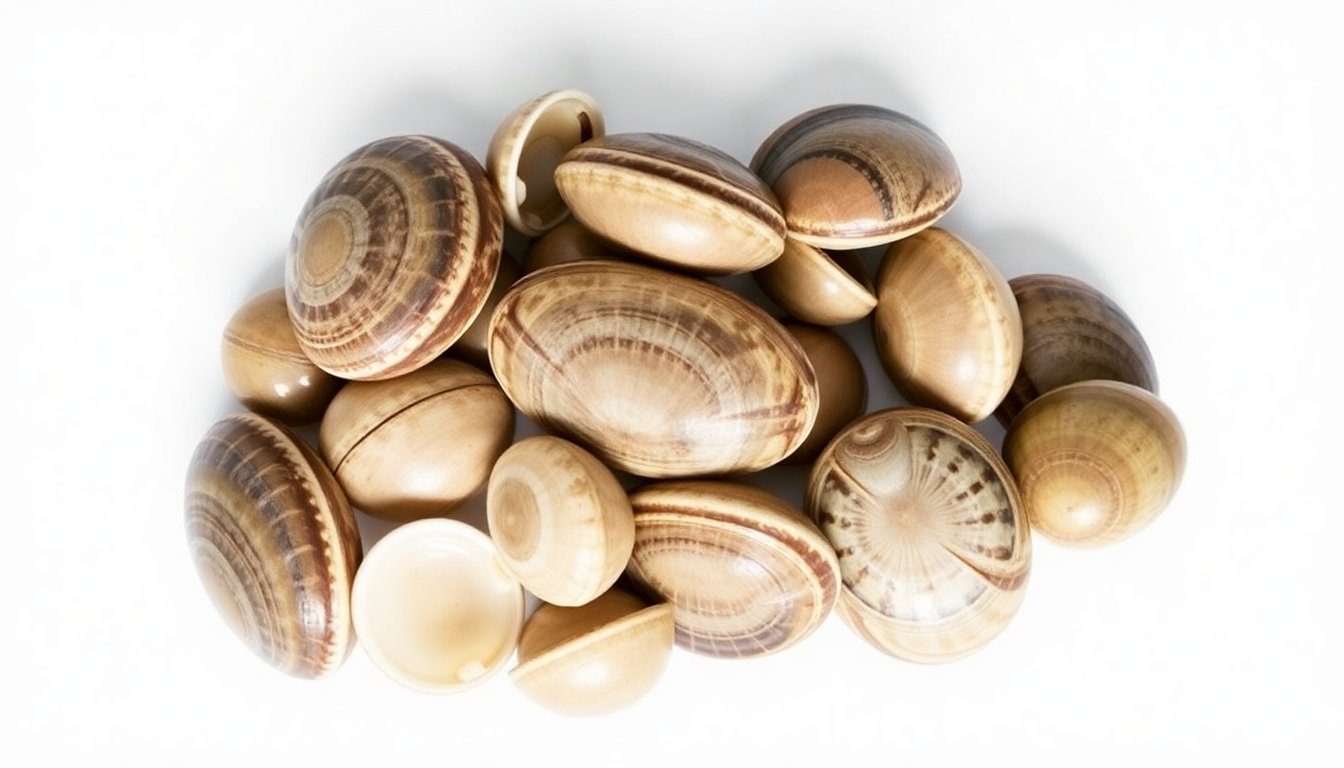
Quick Answer: How Scientists Confirm a Reproducing Manila Clam Population
Scientists confirm a reproducing Manila clam (Ruditapes philippinarum) population by gathering evidence that the clams are not just present but are successfully spawning and recruiting new individuals. A single shell or a few adult clams could be strays, but a reproducing population leaves a clear signature: repeated observations of multiple size classes (including tiny, recently settled spat) over time at the same location [7][5]. The strongest evidence comes from sieve-based sampling that yields live, microscopic recruits, which directly demonstrates recent reproduction and recruitment [7]. This standard of proof was applied by a 2026 study led by UMass Amherst, MIT Sea Grant, and the Center for Coastal Studies, which confirmed the first established Manila clam populations in the northeastern U.S. [7].
Practical Takeaways for Shell Observers
If you are a New England coastal observer tracking Manila clam sightings, here is a decision tree to help you distinguish between a stray shell and a potential reproducing population. This guide is based on desk research and sourced synthesis of published scientific findings; it does not reflect firsthand testing by this site.
| Reader Condition | Question | Branch | Recommended Next Step |
|---|---|---|---|
| You find a single empty shell on the beach. | Does the shell look fresh (still glossy, intact)? | Single shell, no evidence of live clams nearby. | Document it on iNaturalist with a photo, location, and date [6]. It may be a discarded dinner shell or a dead drift specimen. No further action needed unless you see more. |
| You find multiple shells at the same site over several visits. | Do the shells vary in size from small (under 10 mm) to large (over 40 mm)? | Multiple size classes suggest repeated recruitment over time. | Notify the UMass Amherst team at aputnam@umass.edu with photos, estimated lengths, and whether the clams were alive or dead [6]. This is a candidate for a reproducing population and warrants professional investigation. |
| You discover a cluster of live clams, including tiny ones (<5 mm). | Are the tiny clams alive, and can you see them without a sieve? | Presence of live, tiny spat confirms recent spawning and recruitment. | Contact the research team immediately (aputnam@umass.edu) and do not disturb the site. This is the strongest evidence of an established, reproducing population [7]. Scientists will use sieve-based methods to collect and verify the smallest individuals [7]. |
Main Explanation: The Evidence Ladder
1. Repeated Observations and Size Classes
A key indicator of a self-sustaining population is the presence of multiple age classes. Scientists track whether clams are found in a range of shell lengths, from newly settled spat (around 0.2 mm) to mature adults [4]. If only one size class (e.g., all large adults) is seen, it may represent a single recruitment event or a one-time introduction. Repeated visits over months or years that reveal a spread of sizes – especially tiny juveniles – suggest ongoing recruitment [7].
2. Morphology, Genetics, and Records
Visual identification alone is not enough. Researchers confirm species identity using shell morphology (shape, hinge, ligament) and, when needed, genetic markers such as mitochondrial COI sequences or microsatellite loci [1][2]. For instance, a 2020 study of East Asian populations found that aquaculture activities may have promoted gene exchange, leading to high genetic diversity in certain wild populations [1]. For introduced populations in North America and Europe, genetic analyses have been used to confirm that present-day structure matches reported introduction histories [2]. In the Massachusetts study, morphological identification was combined with genetic confirmation to establish that the clams were indeed Ruditapes philippinarum [7].
3. What the Massachusetts Study Reported
In July 2026, a team of biologists from UMass Amherst, MIT Sea Grant, and the Center for Coastal Studies published findings in Biological Invasions documenting the first established Manila clam populations in the northeastern Atlantic [7]. They used sieve-based sampling to collect tiny, live specimens from Cape Cod and Boston Harbor. As the study notes: "Using sieve-based sampling, they yielded tiny, live specimens, confirming recent reproduction and recruitment" [7]. Earlier reconnaissance, including a 2025 field trip where about 40 Manila clam shells were found at Spectacle Island [5], had raised suspicions, but it was the discovery of live spat that confirmed a reproducing population.
4. Why One Shell Is Not Population Confirmation
A single shell (or even a few empty shells) can be misleading. Manila clam shells are commonly sold in seafood markets and may be discarded by beachgoers [5][6]. A shell could also be a relic from a single dead individual that drifted into an area. Without evidence of multiple live individuals, especially newly settled spat, scientists cannot conclude that a population is reproducing. The presence of a reproducing population requires what ecologists call recruitment – the successful survival of new individuals to the point where they can be sampled. In a study of newly settled Manila clam spat in Puget Sound, only 1.2% of the initial settlers survived until the following June, highlighting how rare and difficult it is to detect recruitment [4]. That is why the 2026 Massachusetts study specifically targeted tiny, live clams as the gold standard of evidence [7].
References
- [1] Y Tan et al. (2020). Population genetics of the Manila clam (Ruditapes philippinarum) in East Asia. PMC. https://pmc.ncbi.nlm.nih.gov/articles/PMC7736867
- [2] D Cordero et al. (2017). Population genetics of the Manila clam (Ruditapes philippinarum) introduced in North America and Europe. PMC. https://pmc.ncbi.nlm.nih.gov/articles/PMC5206634
- [3] S Zheng et al. (2023). Population Genetics of Manila Clam in China Inferred from Microsatellite Markers. PMC. https://pmc.ncbi.nlm.nih.gov/articles/PMC10135866
- [4] J.G. Williams (1979). Growth and survival in newly settled spat of the Manila clam. NOAA Fishery Bulletin. https://spo.nmfs.noaa.gov/sites/default/files/pdf-content/1979/774/williams.pdf
- [5] MIT Sea Grant (2025). On the Lookout for Non-Native Species: Investigating Manila Clams. https://seagrant.mit.edu/2025/09/18/on-the-lookout-for-non-native-species-investigating-manila-clams
- [6] WHOI Sea Grant (2026). Help Track a Surprising New Arrival on Our Shores. https://seagrant.whoi.edu/manila-clams
- [7] MIT Sea Grant (2026). Biologists from UMass Amherst, MIT Sea Grant, and Center for Coastal Studies Identify First Established Colonies of Invasive Manila Clam in Northeast. https://seagrant.mit.edu/2026/07/07/manila-clam