Quick Answer
If you find a clam shell on a New England beach that you suspect is a Manila clam (Ruditapes philippinarum), taking clear, organized photos and recording key observations can help scientists confirm the sighting. This guide provides a step-by-step photo checklist based on information from government agencies and extension organizations tracking this non-native species [3][4][6]. All recommendations are based on desk research and sourced synthesis.
Main Explanation
Before Documenting a Find
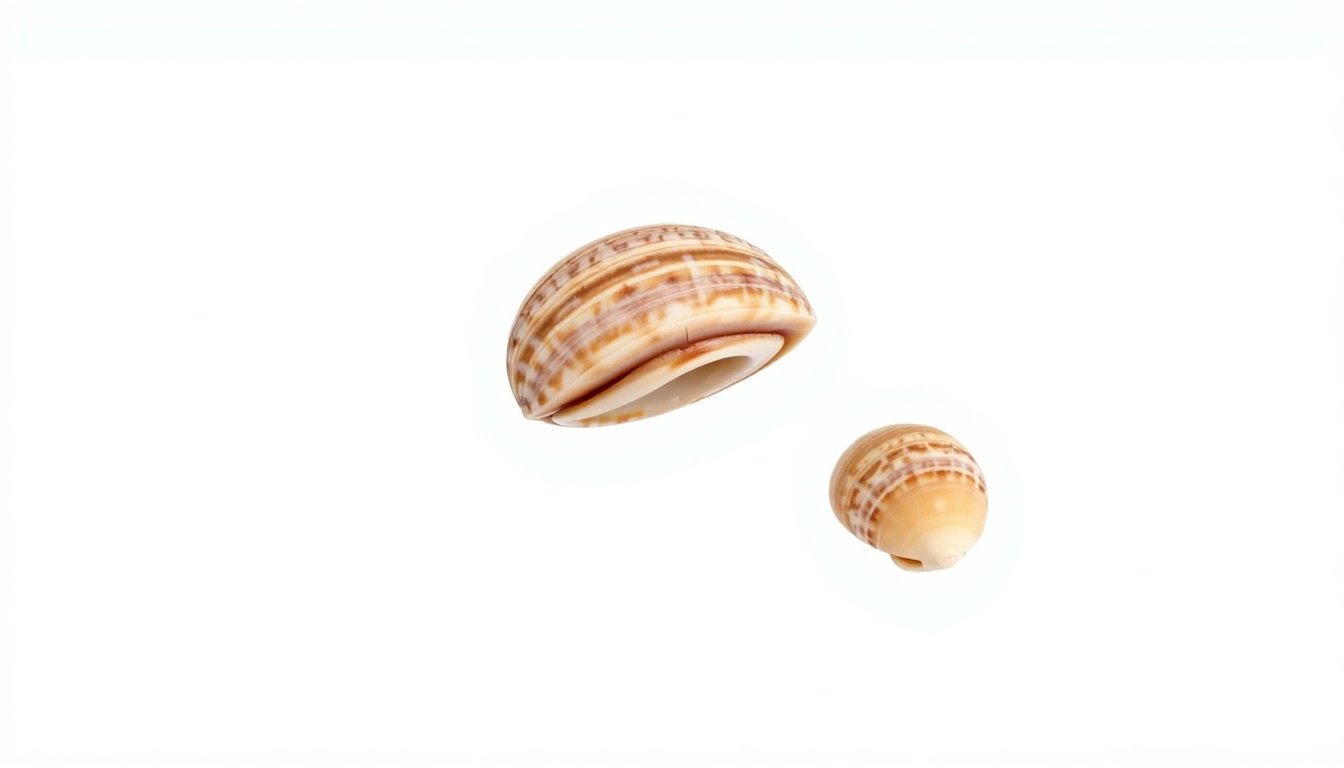
Before you head out, familiarize yourself with basic Manila clam features. The shell is oblong, up to 2.5 inches, with concentric rings and radiating line ridges; color varies from grey, brown, or mottled, and the inside may show some purple [6]. It is typically found in gravel, mud, or sand above the half-tide level, buried 2-4 inches deep [6]. In Washington State, WDFW notes that clams can be dug by hand or hand-operated tools, and holes must be refilled [1]. It is also critical to check local biotoxin alerts before harvesting any shellfish for consumption [1].
Views Requested by Identification Resources
The following views and information are requested by the teams tracking this species [3][4]:
- Photo of the whole clam or shell (top view and bottom view showing the hinge).
- Close-up of the shell surface to show the concentric rings and radiating ridges.
- Inside of the shell (if possible) to check for purple staining [2][6].
- Siphon tips (if alive) – Manila clams have split siphon tips, while native littlenecks have fused tips [6].
Include Scale Without Disturbing Habitat
Provide a scale reference (e.g., a ruler or coin) next to the clam to allow size estimation, as researchers request an estimate of length [3]. Do not remove the clam from its immediate area if it appears alive; simply photograph it where it lies. If the clam is dead (empty shell), you may pick it up for a photo, but return it to the same spot afterward to avoid disrupting the habitat.
Location and Observation Details to Record
Include the following details with your report [3][4]:
- Date of observation.
- Exact location (beach name, town, state; GPS coordinates if possible).
- Alive or dead (if alive, note whether it was buried or on the surface).
- Estimated length of the shell in inches or centimeters.
- Number of clams found (count all visible individuals).
- Habitat description (e.g., gravel, mud, sand; above half-tide level) [6].
Photo Checklist
Use this checklist to ensure your photos include all necessary details:
- [ ] 1. Whole clam/shell – top view
- [ ] 2. Whole clam/shell – bottom view (hinge)
- [ ] 3. Close-up of shell surface (concentric rings and radiating ridges)
- [ ] 4. Inside of shell (showing possible purple stain)
- [ ] 5. Scale object (coin, ruler) placed next to clam
- [ ] 6. Siphon tips (if alive) – photograph from above or side
- [ ] 7. Habitat photo – wider shot showing the surrounding beach or flat
Why Photos May Remain Inconclusive
Even with excellent photos, identification may remain inconclusive because:
- Similar species: Native littleneck clams (Leukoma staminea) look very similar; they are more round in shape, have fused siphon tips, and are usually white inside [6].
- Juvenile or worn shells: Small or eroded shells may lack clear diagnostic features.
- Lighting and angles: Poor lighting or missing views (e.g., no siphon or hinge) can prevent confirmation.
- Need for genetic or isotopic analysis: In some cases, only lab methods can definitively distinguish species [5].
If your photos are inconclusive, still report them, scientists may still use the data to track the species' spread [3][4].
Decision Tree: What to Do Next
| Reader Condition | Question | Branch | Recommended Next Step |
|---|---|---|---|
| Found a single empty shell with no clear features | Can you see concentric rings AND radiating ridges? | No | Photograph shell from multiple angles and scale; upload to iNaturalist with location and date for expert review [3][9]. |
| Found multiple live clams with split siphon tips | Are the clams buried above the half-tide line in gravel/sand? | Yes | Count the clams, estimate sizes, record GPS coordinates, and upload photos and details to iNaturalist [3][4][9]. |
For detailed guidance on each step, see the corresponding sections above (e.g., Photo Checklist, Views Requested, Location Details).
References
- Washington Department of Fish & Wildlife. "Manila (littleneck) clam." https://wdfw.wa.gov/species-habitats/species/ruditapes-philippinarum
- Government of Canada. "Manila Clam (Ruditapes philippinarum)." https://www.dfo-mpo.gc.ca/species-especes/profiles-profils/manila-clam-palourde-japonaise-eng.html
- WHOI Sea Grant. "Help Track a Surprising New Arrival on Our Shores." https://seagrant.whoi.edu/manila-clams
- MIT Sea Grant. "On the Lookout for Non-Native Species: Investigating Manila Clams." https://seagrant.mit.edu/2025/09/18/on-the-lookout-for-non-native-species-investigating-manila-clams
- Bianchini, G., et al. "Traceability and Authentication of Manila Clams." Molecules 26, no. 7 (2021): 1859. https://pmc.ncbi.nlm.nih.gov/articles/PMC8037060
- WDFW and DOH. "Bivalve Shellfish Identification Handout." https://wdfw.wa.gov/sites/default/files/2024-02/wdfw-and-doh-bivalve-shellfish-identification-handout-aug-2023-0.pdf
- Salem Sound Coastwatch. "Spotlight: Manila Clams." https://salemsound.org/spotlight-manila-clams
What to Do: Practical Takeaways
- Photograph the clam or shell following the checklist below.
- Record the date, exact location, whether it was alive or dead, an estimate of length, and the number of clams found [3][4].
- Report your sighting: upload photos and notes to iNaturalist [3][9].